DIY Permanent LED Christmas Lights For Roof Styles
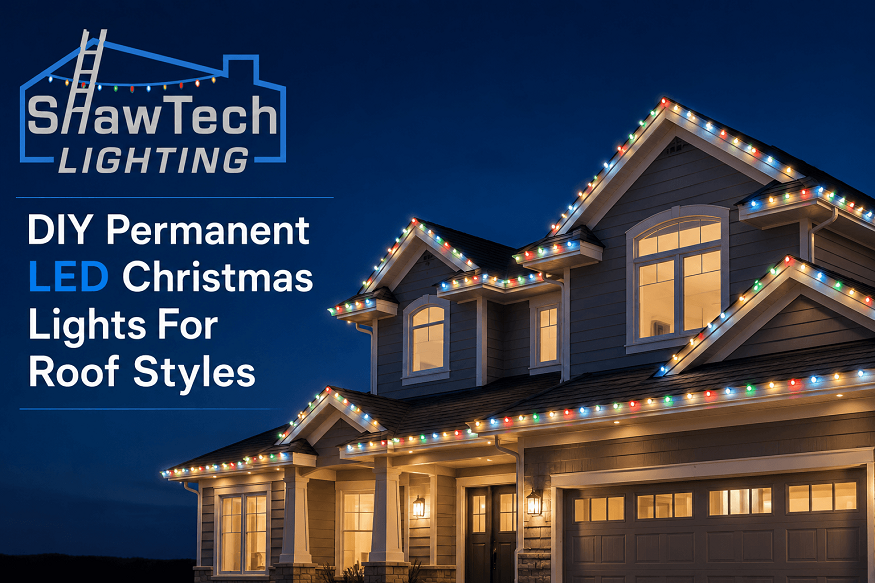
Every home has a different roofline. Some are simple and straight. Others include peaks, gables, dormers, porches, garages, second stories, and tricky transitions. That roof shape affects how DIY permanent LED Christmas lights should be planned.
A good system follows the home’s architecture. The lights should highlight the shape of the house, not fight against it. With a well-planned setup from ShawTech Lighting, the layout can match the roof style so the finished display looks cleaner during Christmas and more useful throughout the year.
Before installing permanent DIY Christmas lights, take time to study the roofline. The shape of the home will guide how much lighting you need, where sections should start and stop, and where extra planning may be required.
Why Roof Style Changes The Installation Plan
Permanent lights are not placed the same way on every home. A straight ranch roofline may need long, consistent runs. A home with steep gables may need careful peak planning. A two-story home may need safe access and better power planning.
Read More : How To Create An Effective Annual Home Inspection Checklist
Roof style affects:
- Light count
- Track length
- Wire routing
- Power needs
- Controller placement
- Corner transitions
- Ladder safety
- Daytime appearance
- Nighttime symmetry
A layout that works on one home may not work well on another. Start with the home in front of you.
Common Roof Styles And Planning Needs
| Roof Style | Planning Focus | Helpful Tip |
| Straight Ranch Roofline | Long even runs | Keep spacing consistent from end to end |
| Gabled Roof | Peaks and angled lines | Plan both sides of each peak together |
| Dormer Roof | Small separate sections | Decide if each dormer should be lit |
| Two-Story Home | Height and access | Map safe ladder or lift needs early |
| Garage-Forward Home | Visual balance | Include garage lines in the main design |
The roof style should shape the installation plan before materials are ordered.
Straight Rooflines
Straight rooflines are usually the easiest for DIY permanent LED Christmas lights. They allow clean, continuous runs with simple spacing. Even so, measuring matters. Small spacing errors can become more visible over long sections.
Planning Tips For Straight Runs
- Measure the full roofline length
- Mark the start and end points
- Keep light spacing even
- Plan wire entry near a discreet end
- Check for gutters, vents, and trim changes
- Review the roofline from the street
Straight rooflines work well for classic holiday scenes, warm white accent lighting, and simple color patterns.
Gabled Roofs
Gables add character to a home, and they look great with permanent lights. They also require more careful planning because the lights need to follow angled roof sections and meet cleanly at peaks.
Each peak should look centered and balanced. If spacing is rushed, the top of the gable can look crowded or uneven.
Gable Planning Checklist
- Measure both angled sides of the gable
- Mark the peak before installation
- Plan how the lights meet at the top
- Keep both sides visually balanced
- Route wires along trim or soffit lines
- Review the gable from ground level
Gables often become the most noticeable part of a display, so they deserve extra time.
Dormers
Dormers can add charm, but they also add decisions. Some homeowners light every dormer. Others focus on the main roofline and leave dormers unlit for a cleaner look.
The right choice depends on the home’s design and the display style. Lighting dormers can create depth. Leaving them out can make the layout simpler.
Dormer Questions To Ask
- Are the dormers visible from the street?
- Do they match the main roofline style?
- Will lighting them improve balance?
- Can wires be routed cleanly?
- Is safe access possible?
- Will the added lights require more power planning?
Dormers are small, but they can add complexity fast.
Two-Story Homes
Two-story homes can look amazing with permanent DIY Christmas lights, especially when upper and lower rooflines are planned together. The main concerns are access, safety, power, and clean transitions.
Working at height can be dangerous. Some homeowners may handle lower sections themselves and bring in help for upper areas. The plan should place safety first.
Two-Story Planning Tips
- Map upper and lower roofline sections separately
- Plan safe access before installation day
- Avoid overreaching from ladders
- Keep controller and power locations practical
- Think through wire routes between levels
- Test sections before final mounting
A two-story layout should look connected, even if it is installed in separate stages.
Garage-Forward Homes
Many homes have a garage that sits closer to the street than the main living area. That makes the garage roofline an important part of the display.
If the garage is ignored, the lighting may feel incomplete. If the garage is overdone, it can draw too much attention away from the rest of the home.
Garage Lighting Ideas
- Outline the garage roofline
- Match spacing with the main roofline
- Add lights above the garage door if suitable
- Keep colors consistent across sections
- Hide wires near trim or inside the garage
- Use the garage for power and controller access
Garage areas often provide convenient access for power, which can make them a smart starting point.
Flat Or Low-Slope Rooflines
Flat and low-slope roofs may not have the same dramatic angles as gables, but they can still look clean with permanent LED lighting. The key is following strong horizontal lines.
Placement may involve fascia, trim, parapet edges, or soffit areas. The lights should create a crisp line that feels like part of the building.
Layout Tips For Flat Rooflines
- Keep lines straight
- Avoid uneven dips
- Use trim edges as guides
- Plan corner turns carefully
- Hide wires near edges or behind trim
- Use consistent spacing across long runs
Flat rooflines pair well with modern lighting scenes and warm white accents.
Plan For Power By Roof Section
Different roof styles can affect power needs. Long runs, upper levels, and multiple lit sections may require careful planning so lights stay bright and consistent.
Power planning should happen before installation. Think through how each section connects, how far power must travel, and where the controller will sit.
Power Planning Questions
- How many total lights will be installed?
- Which roof sections are farthest from power?
- Will upper and lower levels be connected?
- Are there long gaps between sections?
- Will expansion be added later?
- Where can equipment stay protected?
A reliable system starts with the right power plan.
Final Thoughts
DIY permanent LED Christmas lights should follow the shape of the home. A clean layout depends on the roof style, roofline measurements, power access, wire paths, and safe installation planning.
Read More : How Dumpster And Porta Potty Rentals In NJ Keep Job Sites And Events Clean And Efficient
Straight rooflines, gables, dormers, garages, flat edges, and two-story sections all need their own approach. With a properly planned system from ShawTech Lighting, the lighting layout can respect the architecture so the finished system looks polished during Christmas and useful all year.
A well-planned roofline makes permanent DIY Christmas lights feel like part of the home, not a seasonal add-on.