THINGS TO CONSIDER WHEN CHOOSING A SHOWER FLOOR TILE
The shower floor works harder than nearly every other surface in the bathroom. It has to withstand continuous:
- Water exposure
- Soap residue
- Everyday use
At the same time, it should remain safe and stylish for many years. So, selecting the right material and finish requires a different set of considerations.
Slip resistance should be the top priority
Most importantly, a shower floor tile must be a safe place to stand onif it becomes wet. Shiny finishesare beautiful. But they turn into a dangerous hazard when soap and water are present.
Look for tiles that are either:
- Textured
- Have a matte finish
Also, check the slip resistance rating before making a decision. This one aspect is more important than any cosmetic appeal. It should never be sacrificed for looks.
Smaller tiles drain better
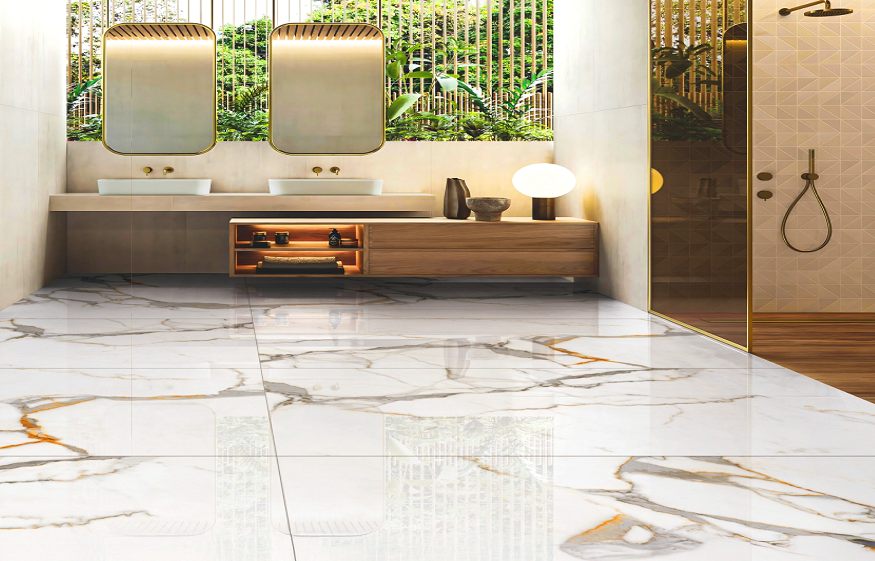
Larger format tiles may seem pretty. But they are not necessarily a good choice for a shower floor. They need fewer grout lines. That doesn’t create the proper slope required for good drainage.
Read More: How To Approach Renovating Your Bathroom
Instead, opt for mosaic-style tiles or smaller formats. They are typically easier to install with the proper gradient that leads toward the drain. This minimizes the chance of water pooling. It makes the floor truly functional, not just decorative.
Small tiles also create more grout lines. That results in a bit more texture and grip underfoot.
Grout choice affects maintenance
The grout is placed between the floor tiles in the shower. It endures far more punishment than grout in any other area of the home. So the choice is quite significant.
Epoxy is more resistant to stains and moisture. It is becoming more popular for this use because it lowers the maintenance costs of:
- Scrubbing
- Resealing
However, it is more expensive than standard cement-based grout.
Color and pattern should hide wear realistically
A flawless white surface shines in a showroom. But in a bathroom that is used frequently, it quickly reveals stains from:
- Soap scum
- Hard water stains
- Overall wear
This will happen quickly compared to a tile that has some natural variation or a slight tone.
Read More: Budget-Friendly Bathroom Makeovers: High Impact, Low Cost
Instead, choose a finish that disguises everyday use. This will keep the space looking neatfor longer. It matters considerably in a high-use area like a bathroom.
Compatibility with the drain and slope
Not all tile sizes and shapes are perfect for all drain patterns.
- Linear drains work well with larger format tiles. They form a single slight slope.
- A central drain would work best with smaller format tiles. They are arranged radially in relation to the center.
Before installation, check material compatibility with the drainage design. This way, you can prevent costly rework.
Final thoughts
The bathroom is the wettest part of the house. You must exercise caution while selecting the tiles. Using the wrong ones might result in serious:
- Sliding risks
- Subfloor mold
- Water damage
- Never-ending cleaning annoyances
Due to these particular functional requirements, you should put safety and material performance first. For example, prioritizematte-finished porcelain before focusing on colors and styles.