Mastery in Modern Cabinetry Renewal: Critical Cabinet Refinishing Details That Optimize Paint Work and Precision
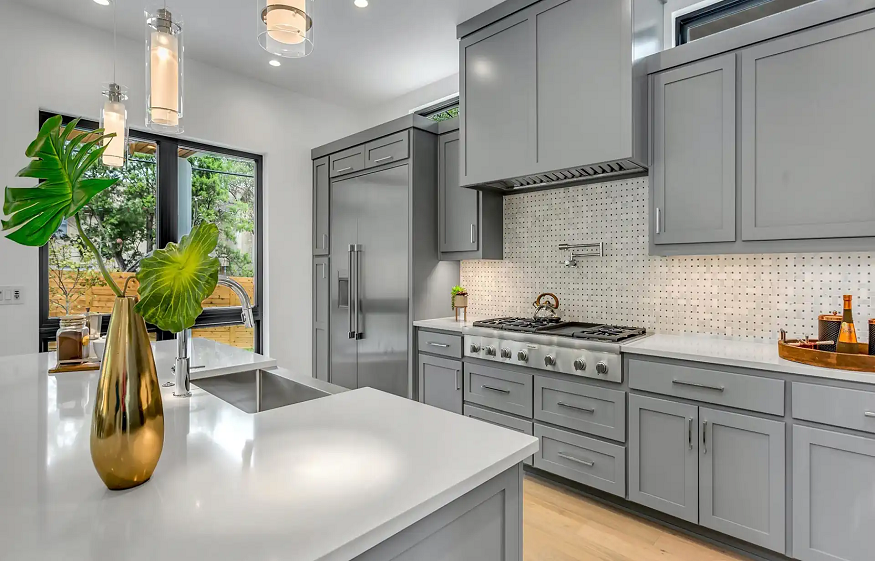
For most kitchens, for example, disaster happens soon after every standard cabinet painting. This is because following standards blindly will never work in high stake surface environments. Standard wall paints (latex) are “thermoplastic,” meaning they soften with heat. In a kitchen, this causes doors to stick to the frames, eventually tearing the paint off. As such, long-term failure rate of standard painting methods on cabinetry has become impossible to ignore.
1.Moisture and Environmental Management
Experienced Kitchen Cabinet Painters will undertake a vulnerability assessment- a pre-coating structural audit that identifies what needs fixing before painting starts. This is a critical step in professional paint work that primes not just the surface, but the entire system for durability, while guiding paint work decisions that mitigate future failure.
Read More: Spotlight Eye-Catching Shades That Add Character And Create A Lively, Welcoming Kitchen
For example edges and seams for cabinets in bathrooms, kitchens, and laundry get exposure to water damage. Such can initiate the primary points of failure.
Professional strategies include:
- Back-priming edges: Seals the bottom and sides to prevent water intrusion
- Moisture audits: Identify swollen or softened wood for repair before coating
- Antimicrobial additives: Protect surfaces from mold and mildew, especially near sinks or dishwashers
Result:
- Cabinets withstand high-humidity environments
- Paint layers remain bonded and consistent
- Long-term resilience reduces maintenance costs
Treating cabinets like static objects is costly—experts stabilize and protect them at the microscopic level.
2. Chemistry and the Inter-Coat Bond
Technical Reality Check: Your cabinetry system isn’t just a substrate for paint work; it’s a reaction battlefield. As such, as a homeowner, you shouldn’t stop at thinking about what color you want, you must go beyond and start thinking about the invisible war happening on your kitchen surfaces; years of cooking oils, humidity, and cleaning residues that compromise adhesion.
Critical strategies include:
- Shellac or high-adhesion primers that chemically “bite” into the wood, sealing tannins and oils
- Mildew-resistant lacquers that thermoplastically cure into a hard, friction-resistant layer
- Sequential layering that ensures each coat fuses to the substrate and the previous layer
Benefits:
- Doors and drawers resist scuffs, fingerprints, and household cleaners
- Surfaces retain a factory-smooth finish without peeling for a decade
- High-use areas like handles and railings remain flawless even under constant operation
Refinishing is chemistry applied with surgical precision—it’s about performance, not just appearance.
3. Structural and Ergonomic Precision
Your cabinetry is not like walls—static objects that just remain passive; your cabinetry is active furniture that has a relentless amount of physical and environmental stress to endure. A high-touch surface that must withstand kinetic stress, thermal expansion, and chemical attacks. Also, weak joinery or misaligned doors will ruin even the best finish.
Key considerations:
- Substrate integrity audit: Check for loose panels, creaks, or shifting frames. Repairs prevent cracking paint
- Hinge and hardware calibration: Perfect alignment ensures doors hang seamlessly, maintaining visual integrity
- Vertical hang spraying: HVLP atomization combined with proper thixotropy prevents sagging or orange peel
Outcome:
- Cabinet surfaces stay even and smooth
- Doors open and close with precision
- Ergonomics and visual harmony are preserved
This is where engineering meets craft—the difference between a good-looking cabinet and a modern, durable centerpiece.
4. Aesthetic and Functional ROI
Cabinets define the perceived quality of a kitchen or bathroom. A modern, smooth finish combined with precise ergonomics elevates both usability and property value.
Read More: Kitchen Updates That Actually Add Value To Your Home
Critical refinishing details:
- Optical modernization: Transition from dated wood grains to neutral, seamless finishes
- Hinge realignment: Ensures doors sit perfectly, supporting visual symmetry
- Surface smoothness: Factory-grade spraying removes brush marks and ensures uniform sheen
Result:
- Immediate visual upgrade, creating a high-end impression
- Surfaces are easy to clean and maintain
- Investment translates into both functional and market-value gains
Ultimately, professional cabinetry upgrading is helps shift from a cycle of temporary fixes to a one-time structural investment. By integrating chemical resilience with mechanical precision, you move beyond surface-level aesthetics to secure the long-term integrity of your home’s most active architectural elements. That way, your storage furniture remains a high-performance asset.